


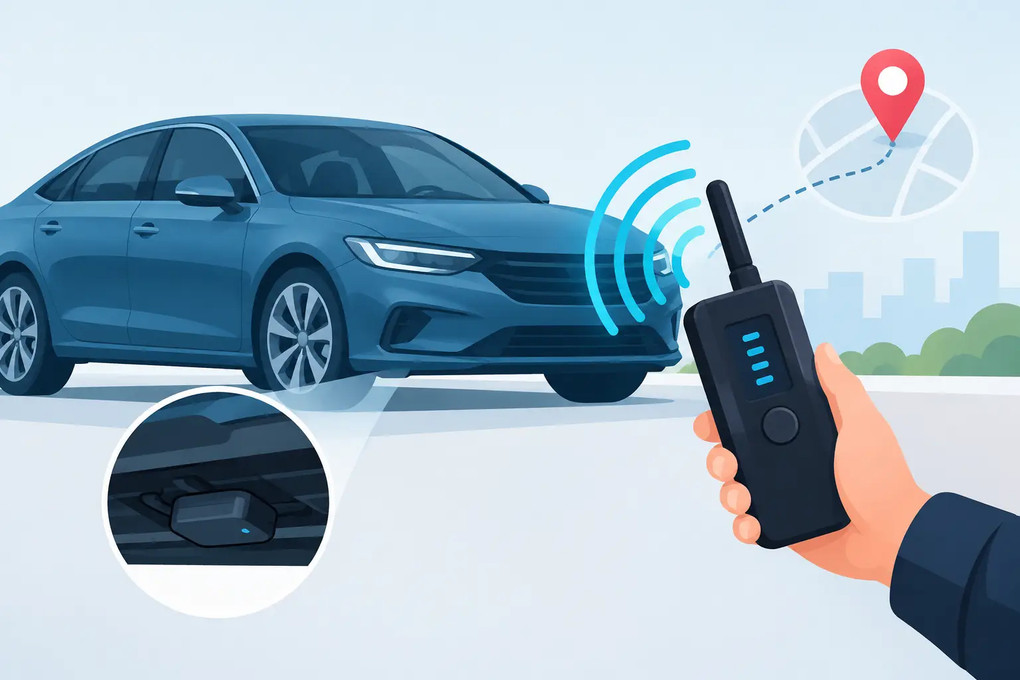
GPS Tracker Detector: Find Hidden Vehicle Trackers
14th Nov 2026
A vehicle can be tracked without a visible wire, a dashboard warning light, or any obvious change in how it drives. Small magnetic GPS units can be placed beneath a car in seconds, while hardwired trackers may be tucked behind trim panels or connected to vehicle power. A GPS tracker detector gives you a practical way to investigate a legitimate concern before assuming the worst.
The key is knowing what type of device you are looking for. Not every GPS tracker transmits the same way, and no single detector can promise to find every device in every condition. A careful physical inspection, paired with the right counter-surveillance equipment, is the most dependable approach.
What a GPS Tracker Detector Actually Detects
Most GPS trackers use GPS satellites to determine location, but GPS reception itself is passive. A tracker does not broadcast a detectable GPS signal simply because it is receiving location data. To report its location remotely, however, many trackers transmit through cellular networks, Bluetooth, Wi-Fi, or radio frequency communication.
That distinction matters. A GPS tracker detector commonly works as an RF signal detector, identifying nearby transmissions from an active tracker. It may alert you to cellular activity, periodic data bursts, Bluetooth signals, or other radio-frequency emissions. Some advanced counter-surveillance tools are designed specifically to identify the transmission patterns associated with GPS tracking devices.
A detector is most effective when the suspected tracker is powered on and communicating. If a unit reports its location only once every few hours, the detector may need to remain in the area long enough to catch that brief transmission. A tracker with no battery, a device switched off, or a passive GPS data logger that stores location internally may not produce an RF signal at all.
Start With a Physical Vehicle Inspection
An RF detector is valuable, but it should not replace a hands-on inspection. Magnetic trackers are often selected because they are quick to place and difficult to notice from standing height. Begin in a safe, well-lit location and use a flashlight, mirror, or inspection camera where needed.
Check the exterior underside of the vehicle first. Focus on the frame rails, wheel wells, behind bumpers, inside the rear bumper area, under the trunk, and around the spare-tire compartment. Look for a small black box, a weather-resistant case, fresh tape, zip ties, unfamiliar wiring, or a magnetically attached object. Do not crawl under a vehicle supported only by a jack.
Inside the cabin, inspect the OBD-II diagnostic port, typically located beneath the driver-side dashboard. Plug-in trackers often use this port for power and can be installed in seconds. Also check beneath seats, inside glove compartments, center consoles, door pockets, trunk panels, and cargo areas.
Hardwired trackers require more care. They may be installed behind the dashboard, near the fuse box, under interior trim, or in the engine compartment. If you find unfamiliar wiring, do not cut it or pull it loose. Some factory vehicle systems, aftermarket alarms, remote-start systems, fleet equipment, and insurance telematics devices can look suspicious to an untrained eye. A qualified automotive technician can help identify the device without damaging your vehicle.
How to Use a GPS Tracker Detector Correctly
Before scanning, turn off or move away from unnecessary wireless electronics. Phones, smartwatches, Bluetooth accessories, Wi-Fi hotspots, dash cameras, wireless tire sensors, and vehicle infotainment systems can all create RF activity. The goal is not to create a perfectly silent environment - that is rarely possible - but to reduce avoidable interference.
Turn the detector on at a moderate sensitivity setting. Starting at maximum sensitivity often creates constant alerts from normal cellular and Wi-Fi signals, making the scan harder to interpret. Slowly move around the vehicle, holding the detector close to likely hiding places. Scan the underside, wheel wells, bumper seams, cabin, trunk, dashboard area, and OBD-II port.
When the detector alerts, lower its sensitivity and scan again. A real nearby source should produce a stronger reading as you move closer and a weaker reading as you move away. This process helps narrow down the location instead of reacting to every ambient signal.
Keep in mind that a moving vehicle can be a difficult environment for RF detection. Cellular towers, passing vehicles, nearby homes, parking lots, and electronics inside the car all produce signals. For the cleanest results, inspect in a quiet private location, then repeat the scan after the vehicle has been parked for a while. A tracker programmed to transmit periodically may reveal itself during a longer inspection.
Watch for Periodic Transmissions
Many modern trackers conserve battery power by sending location updates at intervals. That means a detector may remain quiet for several minutes and then spike briefly. Rather than sweeping quickly once and stopping, monitor suspicious areas for a reasonable period.
If you are concerned about an active cellular tracker, repeat scans at different times of day and after driving. Some devices transmit when the vehicle moves, when it stops, or when a geofence event occurs. Consistent, repeatable signal activity near one specific area deserves closer examination.
Common False Positives
A detector cannot identify intent. It detects electronic activity, not whether that activity is authorized, harmless, or related to tracking. Your phone alone can generate strong readings, especially when it checks for cellular service, sends app notifications, or connects through Bluetooth.
Other common signal sources include factory keyless-entry systems, tire-pressure monitoring sensors, aftermarket alarm systems, remote starters, toll transponders, satellite radio modules, dash cameras, and Bluetooth diagnostic adapters. A nearby car, home Wi-Fi network, or cellular tower may also affect readings.
This is why the best evidence is not a detector alert by itself. The strongest result is a signal that becomes stronger in one precise location and is followed by the discovery of an unfamiliar physical device. If no device is found, do not assume a signal reading proves you are being tracked.
Choosing the Right Counter-Surveillance Tool
A basic RF detector can be useful for identifying active wireless transmitters, particularly cellular and Bluetooth-based tracking devices. For vehicle inspections, adjustable sensitivity is essential because it allows you to pinpoint a signal source instead of receiving broad area alerts.
A purpose-built GPS tracker detector may offer wider frequency coverage or features intended for locating intermittent signals. Signal-strength indicators, audio alerts, vibration alerts, and compact handheld designs can make a careful inspection easier. Battery life also matters if you need to monitor a parked vehicle for extended periods.
For broader privacy concerns, a camera-lens detector can help inspect hotel rooms, offices, rental properties, and other interior spaces for concealed camera lenses. It serves a different job than an RF detector. Some hidden cameras do not transmit wirelessly, and some trackers do not contain a camera, so choosing the tool for the specific threat matters.
Custom Wifi Spy Cameras carries professional counter-surveillance equipment for customers who need practical tools for detecting suspicious electronic devices. Technical support is especially useful when you are learning how to separate ordinary wireless activity from a signal worth investigating.
What to Do If You Find a Tracker
Take clear photos of the device in place before removing it, especially if you may need documentation for law enforcement, an attorney, an employer, or a court proceeding. Photograph the device, its mounting method, any visible markings, and the surrounding area. Record the date, time, and location.
If you believe you are in immediate danger, contact local law enforcement rather than confronting a suspected individual. A tracker can be part of stalking, domestic abuse, theft investigation, fleet management, repossession activity, or a family dispute. Context matters, and safety comes first.
Laws governing vehicle tracking vary by state and circumstance. Owners, lenders, employers, law enforcement agencies, and fleet operators may have different legal authority to use tracking equipment. Do not place a tracker on a vehicle you do not own or have clear legal authority to monitor. When in doubt, speak with a qualified attorney or local law enforcement agency.
A well-used detector does not create certainty from a single beep. It gives you a disciplined way to inspect your vehicle, document what you find, and decide whether the next step is a mechanic, a security professional, or a call for help.